Repair or Replace Your Roof? How to Decide.
By Apex Editorial Team • Jun 18, 2024
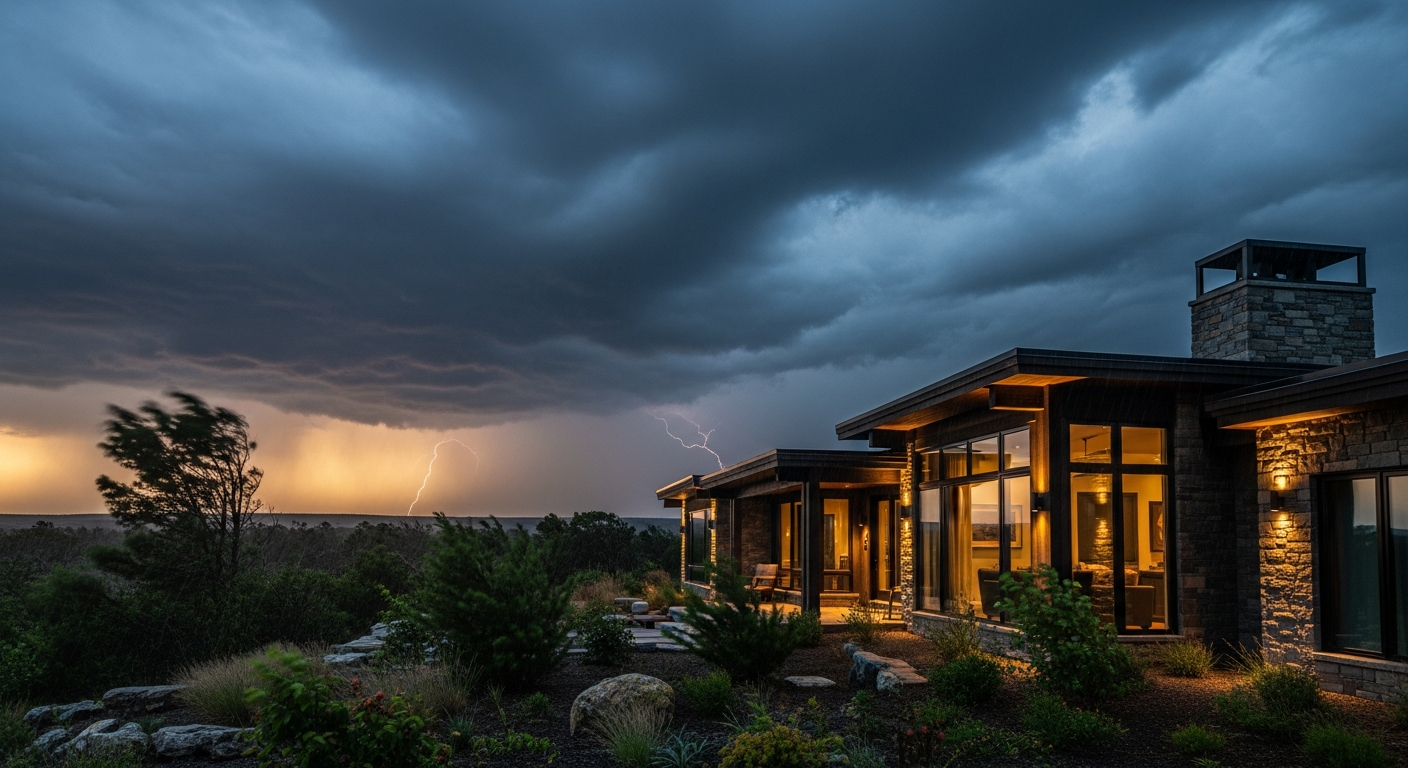
A roof leak. A hailstorm. A home inspector's report. Any of these can put you in front of the same question: is it time to replace the roof, or is a targeted repair the right call? The answer is rarely obvious, and it's complicated by the fact that contractors have a financial stake in one outcome or the other. This article gives you a clear, objective framework for the decision — based on the same criteria our estimators apply on every repair vs. replacement assessment.
The Core Question Is About Remaining Life, Not Repair Cost
The intuitive way to approach this decision is to compare the cost of a repair against the cost of a replacement. That is the wrong frame. The right question is: how much functional life remains in the roofing system, and does the cost of extending that life make financial sense?
A $1,500 repair on a 3-year-old roof that has 25 years of life remaining is almost always the right decision. A $1,500 repair on a 22-year-old roof that has perhaps 3–5 years of life remaining may be the wrong decision — because you are spending money to sustain a system that is approaching the end of its productive lifespan, and you will face replacement cost in the near future regardless.
This is why the first step in any serious evaluation is determining the actual condition and estimated remaining life of the existing roof — not getting a repair quote.
Factors That Point Toward Repair
Repair is the appropriate response when the following conditions are true:
- The roof is less than 15 years old and the damage is localized to a specific section or caused by a discrete event (fallen limb, isolated storm damage).
- The surrounding shingles are in good condition — adequate granule retention, no curling or cracking, structural integrity intact.
- The damage does not involve a valley, penetration, or high-risk flashing area that is difficult to repair correctly without disturbing a larger system area.
- The attic shows no evidence of ongoing moisture infiltration, mold, or insulation damage from the affected area.
- The decking beneath the damaged section is sound — no soft spots, rot, or delamination.
When all of these conditions are met, a targeted roof repair is both appropriate and cost-effective. You are preserving a functional system, not sustaining a failing one.
Factors That Point Toward Replacement
Replacement becomes the correct economic and practical choice when:
- The roof is 18 years old or more, regardless of current visible condition. Roofs approaching end-of-life are statistically approaching multiple concurrent failure points.
- The damage is widespread across multiple sections, slopes, or faces of the roof.
- Multiple repairs have been made in the past several years, indicating a pattern of ongoing failure rather than isolated events.
- The existing shingles show systemic deterioration — significant granule loss, widespread cracking, or brittleness — independent of the specific damage event.
- The attic shows evidence of moisture infiltration that is not traceable to a single, discrete failure point.
- The roof was originally installed over an existing layer of shingles, particularly if the home is 20+ years old.
- A home inspection or insurance adjuster has identified the roof as "at end of useful life."
"The roof that gets patched five times in four years costs more in total than the roof that gets replaced once. The problem is that the patches feel cheaper in the moment."
The Age Factor: Why It Matters More Than You Think
Roof age is the most reliable single predictor of the repair-vs-replace decision, and homeowners consistently underestimate its weight. Here is why:
A standard architectural shingle system does not fail evenly over time. For the first 15–18 years, a quality installation holds remarkably well with minimal maintenance. After that period, the rate of deterioration accelerates. The granule bond weakens, sealants and flashings harden and crack, and the underlayment — which has been exposed to cyclic heat and cold — approaches the end of its functional life.
When you have a leak on a 20-year-old roof, you are not dealing with a single point of failure. You are dealing with a system that has been gradually failing across all of its components simultaneously. The one failure that caused the visible leak is often the least of your concerns.
This is why a professional roof inspection — not just a repair estimate — is the appropriate starting point for any homeowner whose roof is 15 years or older and has experienced any notable damage or leak event.
The 50% Rule as a Starting Heuristic
A commonly cited guideline in the roofing industry is this: if the cost of restoring the roof to good working condition exceeds 50% of the cost of a full replacement, replacement is typically the better financial decision. This is a rough heuristic, not a precise formula, but it captures a useful truth.
If you receive a repair estimate of $4,500 on a roof where a full replacement would cost $16,000, you are spending 28% of replacement cost on a roof of uncertain remaining life. Depending on the roof's age and condition, that may be justified. But if the repair estimate is $9,000 — 56% of replacement cost — the economics of replacement almost always win, particularly if the roof has less than 10 years of useful life remaining.
Insurance Claims and the Decision Threshold
If your roof damage is insurance-related — following a hailstorm or wind event — the dynamics shift somewhat. When insurance covers part or all of the replacement cost, the economic case for replacement strengthens significantly, even on a roof that might otherwise warrant repair.
Insurance policies vary in how they treat partial damage. Some policies have "actual cash value" provisions that depreciate the settlement based on roof age. Others provide replacement cost value, meaning the payment is based on the cost of a new equivalent system. Understanding your policy type is essential before making your repair vs. replace decision. An experienced contractor can help you read the adjuster's scope and determine whether the offer is adequate.
Frequently Asked Questions
Can I get a second opinion on a repair-vs-replace recommendation?
Yes — and you should. Any contractor who discourages a second opinion is a red flag. A quality contractor is confident that their assessment will hold up to scrutiny. Ask each contractor to put their recommendation in writing with supporting documentation (photos, specific condition findings) so you can compare evaluations on equal terms.
How do I know if a contractor is recommending replacement because it's right for me or because it's profitable for them?
Ask them to show you. A credible assessment will include photographs of the specific deficiencies, a written condition report, and a service life estimate. If a contractor recommends replacement but cannot show you documented evidence of systemic failure, ask for a repair estimate as an alternative and compare the documented findings.
What if I'm planning to sell the house in two or three years?
If the roof is aging and showing signs of deterioration, proactive replacement before listing typically returns more than its cost in asking price, negotiating position, and speed of sale. A roof with documented remaining life and a current warranty is a material selling point. A roof that a buyer's inspector flags as "at end of life" is a negotiating liability.
Is a partial re-roof ever a good option?
Occasionally, yes — particularly when only one slope of a complex roof is damaged and the remaining slopes are in sound condition. A partial re-roof done well is structurally sound; the challenge is cosmetic matching and the complexity of integrating new material with existing system components. It is not inherently a compromise solution, but it requires a contractor experienced with the specific integration details.
Related Services & Resources
Not sure where your roof falls?
We'll give you a documented, honest assessment of your roof's condition and a clear recommendation — repair, replace, or monitor — with no pressure in either direction.
Schedule an Assessment