Standing Seam Metal Roofing: A Complete Homeowner's Guide
By Apex Editorial Team • Mar 8, 2024
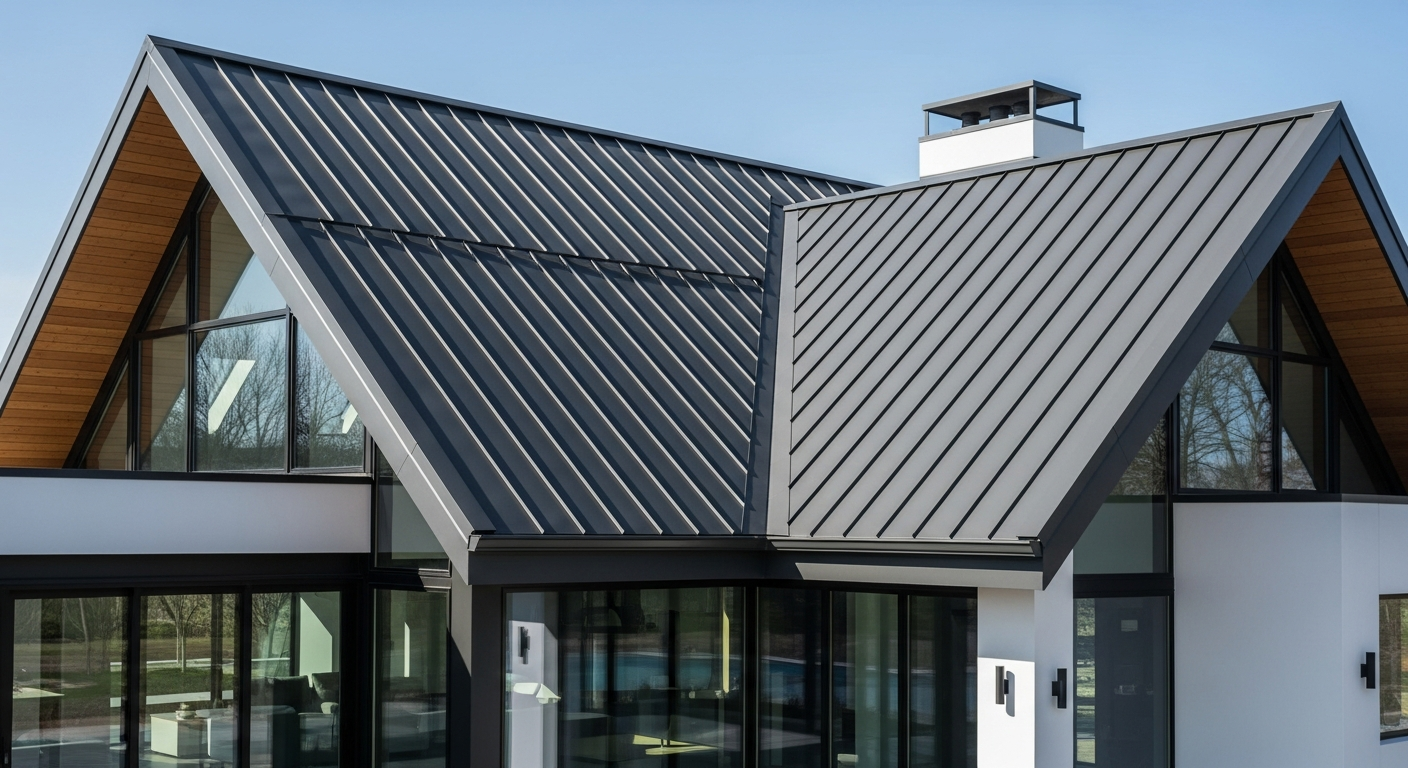
Standing seam metal roofing was once reserved for commercial buildings and high-end custom homes. Today, it is one of the fastest-growing choices among residential homeowners who want a roof that performs for fifty years without compromise. This guide covers everything you need to know before making your decision.
What Is Standing Seam Metal Roofing?
Standing seam refers to a metal roof system in which the panels interlock at raised seams that stand vertically above the flat surface of the panel. Unlike exposed-fastener metal roofing — where screws penetrate the panel face and are exposed to the elements — standing seam systems use hidden clips and concealed fasteners. The result is a flush, architectural surface with no visible hardware and no penetrations that could allow water infiltration.
Panels are typically fabricated from steel, aluminum, copper, or zinc and run continuously from the ridge to the eave. The most common panel widths are 12 and 16 inches, and seam heights range from ¾ inch to 1½ inches depending on the panel profile and manufacturer.
Standing Seam vs. Asphalt Shingles: The Honest Comparison
Most homeowners comparing the two products get stuck on upfront cost, which isn't the right lens. Here is a more complete picture:
Lifespan: A premium architectural shingle roof installed to manufacturer specifications will last 25–40 years in typical metro-area conditions. A properly installed standing seam metal roof should last 50–70 years with minimal maintenance. When you amortize the cost over the life of the product, the math often favors metal.
Weather resistance: Standing seam metal roofing outperforms shingles in high-wind events (most systems are rated to 140+ mph), heavy snow loads, and hail impacts. The absence of exposed fasteners eliminates the most common failure point in storm conditions.
Maintenance: Shingle roofs require periodic inspection for granule loss, cracking, and moss treatment. Metal roofs are largely maintenance-free — they don't absorb moisture, don't support moss or algae growth, and the coatings are factory-applied and UV-stable.
Energy efficiency: Reflective metal coatings can reduce roof-surface temperatures by 50–60°F compared to dark asphalt shingles, which translates to meaningful reductions in cooling loads during Georgia's long, hot summers.
"If you plan to be in your home for more than fifteen years, standing seam metal roofing is almost always the smarter long-term investment."
Cost Expectations
In the Georgia market, installed standing seam metal roofing typically ranges from $18 to $35 per square foot, depending on panel material, roof complexity, and accessibility. Aluminum and Galvalume steel are on the lower end of that range. Copper and zinc — which develop a natural patina and are particularly appropriate for historic homes — sit at the higher end.
By comparison, a premium architectural shingle roof in the Georgia market runs $8–$14 per square foot installed. The delta is real, but so is the difference in expected lifespan and the elimination of one full reroof cycle over the life of your ownership.
The Installation Process
Standing seam metal roofing is not a DIY product and should not be installed by a contractor who does not specialize in it. The panel fabrication, seaming technique, and flashing details require factory training and specialized equipment, including a mechanical seamer that locks the panels together without drilling.
A typical residential installation on a straightforward colonial or ranch proceeds in three phases: the existing roof is removed and the decking inspected and repaired if needed; a synthetic underlayment is applied to the full deck surface; and the panels are then installed from eave to ridge, with each panel clipped to the deck using hidden fasteners that allow for thermal expansion and contraction. Flashing is custom-fabricated at all penetrations, valleys, and transitions.
For a 2,000-square-foot single-story home with moderate complexity, installation typically takes three to five days. Larger or more complex rooflines will extend that timeline.
How to Choose the Right Contractor
The quality of the installation matters more than the brand of the panel. A mediocre installer with a premium product will underperform a skilled crew with a mid-range product every time. When evaluating contractors, ask specifically about their experience with your chosen panel system. Most reputable manufacturers — including our standing seam partner brands — offer contractor certification programs. Ask for the certificate.
You should also verify the contractor's warranty terms. The panel manufacturer covers material defects, but the installation labor warranty is the contractor's responsibility. A confident installer backs their work for at least five years; the best back it for the life of the product.
Finally, request photos of completed standing seam projects — specifically projects on homes similar to yours in architecture and roof pitch. Eave and valley details are where craftsmanship either shows or fails.
For a deeper look at how we approach metal roofing installations or to compare with a full roof replacement using premium shingles, our service pages walk through our process and material standards in detail.
Considering metal roofing for your home?
Our specialists will evaluate your roof, your home's architecture, and your long-term goals — and give you an honest recommendation.
Schedule a Free Consultation