Is Metal Roofing Worth It in Georgia? An Honest Evaluation
By Apex Editorial Team • Jul 22, 2024
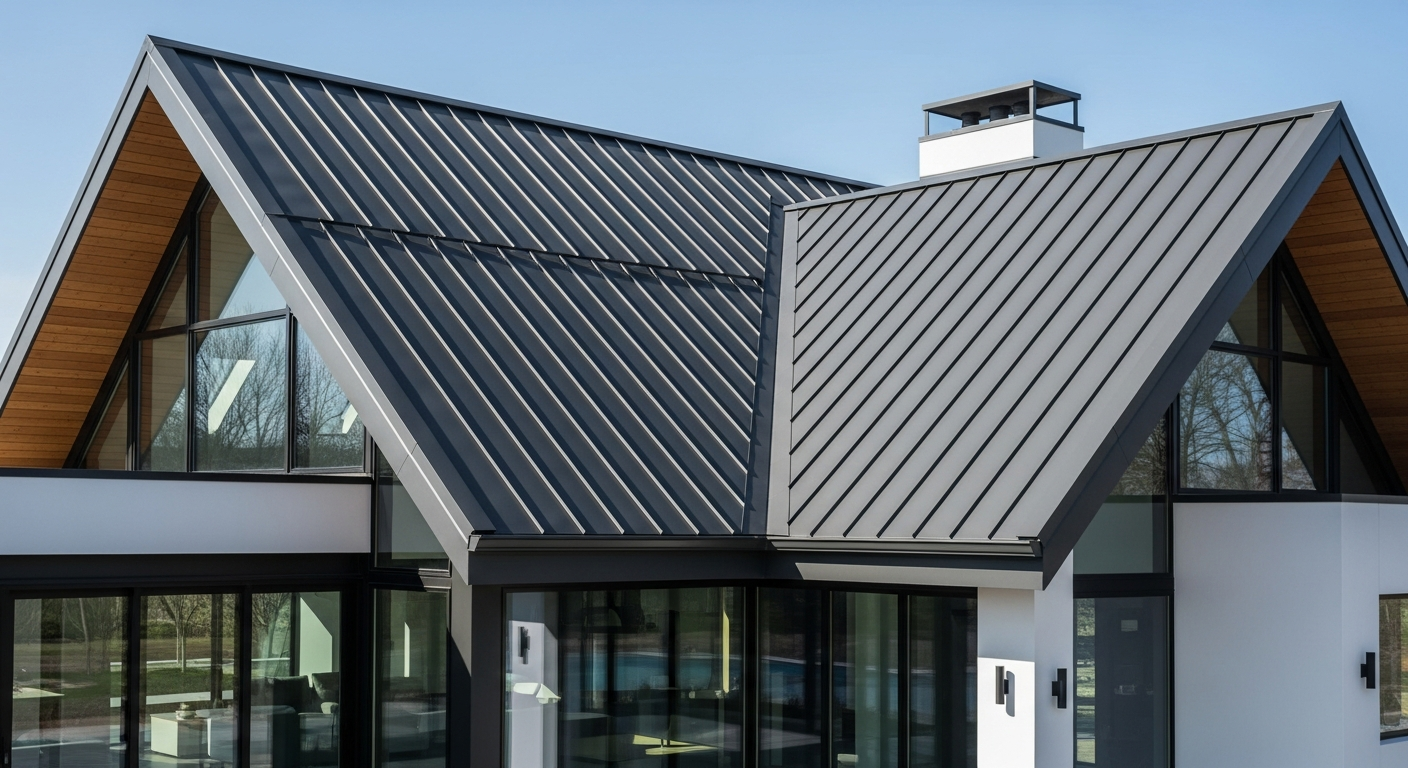
The upfront cost of a standing seam metal roofing system is typically 3–5 times the cost of a premium architectural shingle installation. That gap is real, and it is the primary reason most homeowners hesitate at the decision point. This article gives you an honest, data-driven framework for evaluating whether that premium makes financial and practical sense for your specific situation in Georgia — without a sales agenda in either direction.
The Central Question: What Is Your Ownership Horizon?
Before any cost analysis makes sense, you need to answer one foundational question: how long do you expect to own this home?
If the answer is five years or fewer, the economics almost never favor metal roofing. You will pay a significant premium for a product whose long-term value you will not capture, and you may not recover the cost difference in resale price. A premium architectural shingle installation is almost certainly the right choice for a short ownership horizon.
If the answer is 15 years or more, the calculus shifts considerably. Over that timeframe, you will likely face at least one major shingle repair cycle and begin approaching the end of the shingle system's useful life. Metal roofing, with its 50–70 year lifespan, eliminates that cycle entirely.
If the answer is 30+ years, the lifetime economics almost always favor metal — but the decision still depends on factors beyond pure cost.
The Lifetime Cost Comparison for Georgia Homeowners
Let's run a realistic comparison for a typical 2,400-square-foot Georgia home with a moderately complex roof.
Scenario A: Premium Architectural Shingles
Initial installation (2024): $18,000 — $22,000
Expected lifespan: 30–35 years
Year-30 replacement (inflation-adjusted): $32,000 — $38,000
Maintenance and repair costs over 60 years: $4,000 — $8,000
60-year total cost: $54,000 — $68,000
Scenario B: Standing Seam Metal
Initial installation (2024): $58,000 — $70,000
Expected lifespan: 50–70 years (no replacement needed within 60 years)
Maintenance and repair costs over 60 years: $2,000 — $5,000
60-year total cost: $60,000 — $75,000
At this scale, the lifetime costs are not dramatically different — the metal premium partially pays for itself through the elimination of one full replacement cycle. This math improves further when you factor in energy savings (addressed below) and insurance discounts.
These are estimates, not guarantees. Actual costs depend on roof complexity, material choices, and labor market conditions at the time of any future replacement. But the directional conclusion is consistent: for long-term homeowners, metal roofing is not the extravagance its upfront cost suggests.
Where Georgia's Climate Creates a Real Advantage for Metal
Georgia's climate makes metal roofing particularly well-suited in several specific ways:
Summer heat and UV exposure. Georgia summers are long, hot, and intense — conditions that accelerate asphalt shingle degradation through UV baking and thermal cycling. Metal roofing is largely immune to these stressors. A reflective Kynar 500-coated metal roof also reduces roof-surface temperatures by 50–70°F compared to dark asphalt shingles, which can translate to 15–25% reductions in cooling energy consumption. In a state with Georgia's summer cooling loads, that annual energy saving compounds meaningfully over time.
Spring hailstorms. The corridor from metro Atlanta through the North Georgia mountains experiences regular hailstorm activity. Class 4 impact-resistant shingles offer improved protection over standard architectural shingles, but standing seam metal roofing — particularly 24-gauge or heavier steel — provides a substantially higher level of impact protection. A properly installed steel standing seam system can withstand hail that would compromise an asphalt shingle roof.
Insurance discount eligibility. Many Georgia insurance carriers offer premium discounts of 20–30% for Class 4 impact-rated roofing materials. The strongest impact ratings in residential roofing belong to standing seam metal systems. On a home with an annual premium of $3,000, a 25% discount represents $750 per year — $22,500 over 30 years. This meaningfully changes the lifetime cost comparison in metal's favor.
North Georgia mountain properties. Properties in Blue Ridge, Dahlonega, and the surrounding mountain communities experience occasional snow and ice loading that puts additional stress on roofing systems. Standing seam metal's thermal properties allow it to shed ice and snow more effectively than asphalt shingles, reducing the risk of ice dam formation and the water infiltration that follows.
The Arguments Against Metal Roofing — Honestly Stated
We install both systems and we want you to choose the right one, not just the more profitable one. Here are the honest arguments against metal roofing:
Upfront cost is a real barrier. Not every homeowner can or should absorb a $60,000 roofing investment even if the lifetime economics are favorable. A quality architectural shingle system is an excellent product that serves most homeowners well for 30+ years.
Contractor selection matters enormously. Standing seam metal roofing requires specialized training, equipment, and experience that not all contractors possess. A poorly installed metal roof performs worse than a well-installed shingle roof. The contractor credential is as important as the material choice.
Aesthetic fit is not universal. Metal roofing looks exceptional on certain architectural styles — modern, farmhouse, mountain contemporary, and craftsman — and less at home on others. If your neighborhood's aesthetic strongly trends toward traditional materials and you plan to sell, a metal roof could be a distinction rather than an advantage.
Some claims about noise are overstated — but not entirely wrong. A properly installed metal roof with adequate insulation and an attic air space is not noticeably louder than a shingle roof during rain. But a direct-deck installation on a structure with minimal insulation will amplify rain sound. Installation method matters.
Resale Value: What the Data Shows
Research on metal roofing's effect on resale value consistently shows a premium over equivalent homes with standard shingle roofs. Studies from Remodeling Magazine's Cost vs. Value report have placed the ROI on metal roofing at 85–95% in favorable markets — meaning most of the premium cost is recovered at resale.
In practice, the resale premium varies significantly by market and buyer pool. In North Georgia mountain communities, where metal roofing is common and aesthetically expected, the premium is strong. In suburban Atlanta neighborhoods where shingles dominate, the premium is less predictable.
What is consistently positive is the negotiating position a metal roof provides: sellers with a metal roof do not face the "aging roof" contingencies, repair credits, or price reductions that sellers with older shingle roofs routinely encounter.
Making the Decision: A Framework
Metal roofing tends to be the right answer when:
- You plan to own the home for 15+ years
- Your home is in a hail-prone area and your insurer offers an impact discount
- Energy efficiency is a priority and your current shingles are dark-colored
- Your property's architecture suits a metal aesthetic
- You own a mountain or rural property where longevity and low maintenance are primary values
- You want the permanent roof — the one you never have to think about again
Architectural shingles tend to be the right answer when:
- Your ownership horizon is under 10 years
- Upfront cost is the binding constraint
- Your neighborhood's aesthetic norms strongly favor traditional materials
- Your current roof is less than 15 years old and in good condition — the replacement decision isn't urgent
Our estimators take the time to understand your situation before making a recommendation. For a full side-by-side comparison, see our roof replacement service page and the residential roofing overview.
Frequently Asked Questions
Does metal roofing increase my home's energy efficiency?
Yes, meaningfully. Kynar 500-coated reflective metal finishes redirect solar infrared radiation before it heats the attic, reducing summer cooling loads by 15–25% in Georgia's climate. Cool-roof rated metal products may also qualify for federal energy efficiency tax credits.
Can metal roofing be installed over existing shingles?
In many cases, yes — local code permitting. Over-installation saves the tear-off cost but prevents the decking inspection that often reveals moisture damage or rot that should be addressed. We typically recommend full tear-off for both system types.
Will metal roofing interfere with satellite dish or cell signal?
No. Metal roofing has no meaningful effect on satellite dish reception or cellular signals. This is a persistent myth with no basis in the performance of modern metal roofing installations.
Is metal roofing louder than shingles in rain?
With proper installation — attic air space, insulation, and structural sheathing — a metal roof is not noticeably louder than a shingle roof. Direct-deck installations on structures without adequate insulation can amplify rain sound. Discuss installation method with your contractor if noise is a concern.
How do I find a qualified metal roofing contractor in Georgia?
Look for Georgia-licensed contractors with documented standing seam installation experience, manufacturer certification from the panel brand they're using, and verifiable local project references. Ask to see photos of completed standing seam projects on homes similar to yours in architectural style and roof pitch.
Related Services & Resources
Still weighing shingles vs. metal?
Our estimators give you a side-by-side comparison for your specific home — materials, warranties, lifetime costs, and an honest recommendation. No pressure, no agenda.
Request a Consultation