Storm Damage Roof Checklist: What to Do After a Georgia Storm
By Apex Editorial Team • Apr 22, 2024
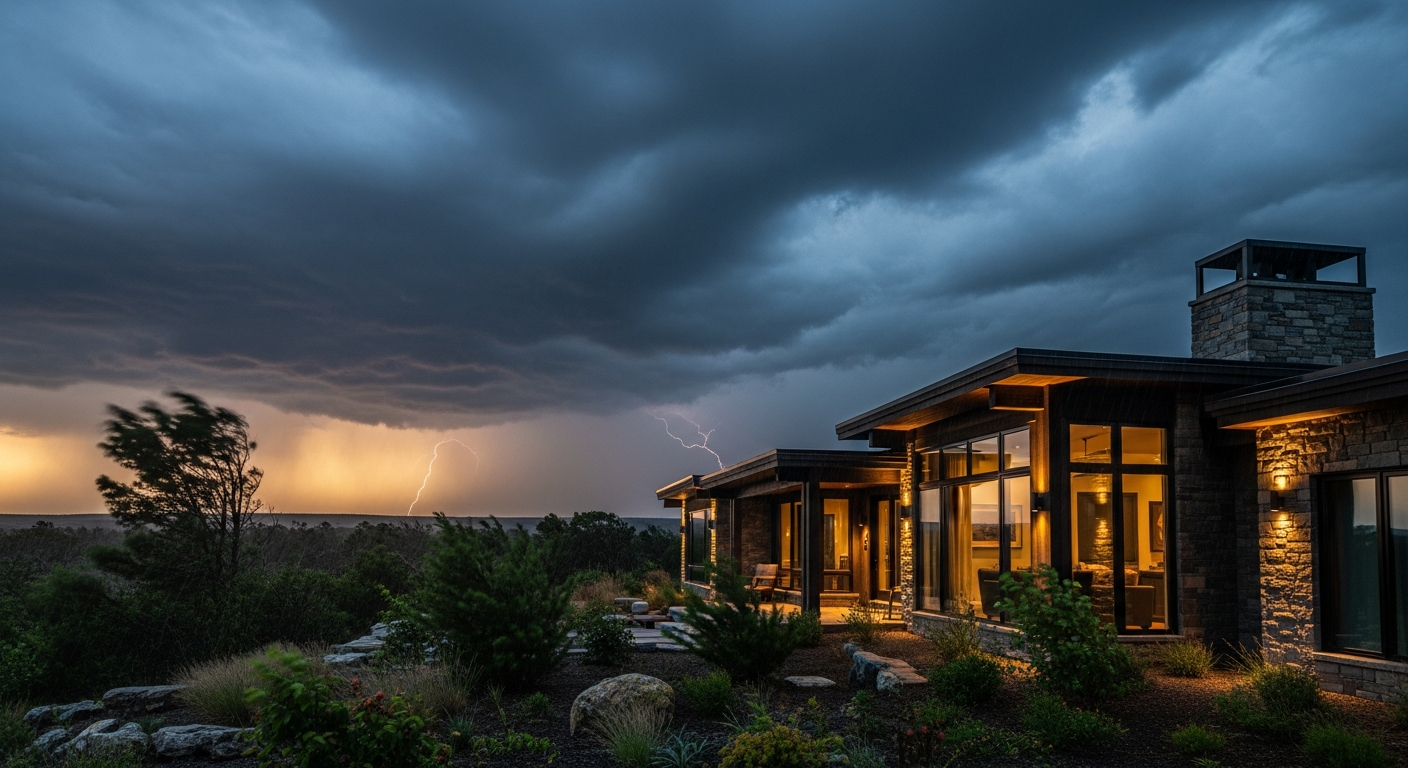
Georgia's spring storm season brings some of the most aggressive hail and wind events in the Southeast. When a storm moves through your area, the actions you take in the first 24–72 hours have a direct impact on your insurance recovery, your timeline to a permanent repair, and the total out-of-pocket cost you absorb. This checklist gives you a clear, ordered sequence of steps — and connects to our storm damage roof repair service for homeowners who need professional response fast.
Step 1: Stay Safe First — Do Not Go on the Roof
The instinct to immediately inspect your roof after a storm is understandable, but it is dangerous. Wet roofing materials are slippery. Structural damage from a storm — broken rafters, damaged decking — may not be visible from the surface. And storm conditions that have just passed can return quickly.
A safe initial assessment can be done entirely from the ground and from inside the attic. From outside, look for: missing shingles (visible bare or darker patches), displaced ridge caps, visible flashing damage at the chimney or dormers, gutters that have pulled away from the fascia, and large granule deposits on the ground or in downspout discharge areas. From the attic, look for any daylight penetrating the roof deck, active moisture, or damp insulation.
Drone documentation — which our emergency roof repair team can provide within hours of a storm — gives you a complete photographic record without putting anyone on a potentially unstable roof.
Step 2: Protect the Interior Immediately
If your initial assessment reveals active water infiltration — or if you can see visible damage that is almost certain to allow water infiltration in the next rain event — interior protection takes priority over documentation.
Move valuables, electronics, and furniture away from any area showing ceiling staining, bubbling paint, or visible moisture. Place buckets or containment under any active drip. If water is reaching electrical fixtures, panels, or wiring, contact an electrician before entering the affected area.
Emergency tarping — applied by a professional — is the correct intervention for active infiltration. Do not attempt to tarp a damaged roof yourself. The risk of falls is significant, and an improperly applied tarp can cause additional damage that complicates your insurance claim.
Step 3: Document Everything Before Any Cleanup
Insurance claims are won or lost on documentation quality. Before any debris is cleared, any temporary repairs are made, or any cleanup occurs, document the damage comprehensively.
Photograph: the full roof from multiple angles using ground-level photos; any visible dents or bruising on gutters, downspouts, HVAC equipment, or painted wood surfaces (hail damage to soft metals is direct evidence of impact severity); interior ceiling damage; attic moisture; and any fallen debris on the property.
Note the date and time of the storm, any public weather alerts or storm reports for your area (these can be retrieved from NOAA's storm database), and whether neighbors reported similar damage. This contextual documentation significantly strengthens an insurance claim.
Step 4: Contact Your Insurance Carrier
After documenting the damage, notify your insurance carrier and open a claim. Most carriers have a claims hotline available 24 hours. When you call:
- Report the date of loss as the date of the storm event, not the date you noticed damage.
- Describe the type of event (hail, wind, falling tree) as specifically as possible.
- Request your claim number and the name of the adjuster assigned to your file.
- Ask about the timeline for an adjuster visit and whether you can have a contractor present during the inspection.
Georgia's standard homeowners insurance policies have claim filing deadlines — typically 12 months from the date of loss, though some carriers impose shorter windows. Do not delay filing because the damage looks minor. What appears minor from the ground can represent significant structural and waterproofing compromise that an adjuster, armed with your photographic documentation, will confirm.
Step 5: Schedule a Professional Inspection Before the Adjuster Visit
This step is one most homeowners skip, and it costs them. The insurance adjuster's job is to accurately assess covered damage — but adjusters are generalists who may not identify every storm-related deficiency. Hail bruising on shingles, for example, is often only identifiable through close contact with the granule surface, not from a cursory walk-through.
An independent roof inspection by a trained contractor before your adjuster visit gives you a complete, documented damage baseline. When the adjuster arrives, your contractor can accompany them, present the photographic documentation, and identify specific damage points the adjuster may have otherwise missed. Claims that are supplemented with contractor-produced documentation are frequently revised upward.
Step 6: Understand What Your Policy Covers
Not all homeowners insurance policies are equivalent, and understanding your coverage type before the adjuster visit helps you interpret the settlement offer correctly.
Replacement Cost Value (RCV) policies pay to replace damaged components with equivalent new materials, without depreciation. This is the most favorable coverage type for roof claims.
Actual Cash Value (ACV) policies depreciate the settlement based on the age and condition of the damaged materials. A 15-year-old shingle roof may be settled at 40–50% of replacement cost under an ACV policy.
Some policies include a "matching provision" that requires the insurer to replace adjacent undamaged sections when the damaged sections cannot be adequately matched by replacement. If your policy includes this provision and your roof has a pattern that is no longer manufactured, you may be entitled to a full re-roof rather than a partial replacement.
Step 7: Get Multiple Estimates — Then Evaluate Them Properly
After the adjuster has provided a scope and settlement offer, get written estimates from licensed Georgia roofing contractors. Compare the estimates not just on price, but on scope coverage: does the estimate address every line item in the adjuster's scope? Does it include any damage items the adjuster missed that your contractor inspection identified?
Be cautious of contractors who door-knock immediately after a storm and pressure you to sign a contract on the spot. Georgia has laws protecting homeowners' rights in post-storm contracting. You have the right to review any contract, seek additional estimates, and cancel within a statutory review period.
Storm Damage Red Flags: Warning Signs of a Compromised Roof
Some storm damage signs are immediately obvious — missing shingles, a fallen branch through the roof. Others are subtle and require professional identification:
- Dents or dimpling in gutters, downspouts, or metal flashing (direct evidence of hail impact)
- Hail spatter marks on soft painted surfaces like window trim or fascia boards
- Circular granule loss patterns in the field of the shingles (hail bruising)
- Lifted or unsealed shingle tabs that were partially loosened by wind loading
- Cracked or displaced ridge caps
- Any movement in chimney flashing following high-wind events
Frequently Asked Questions
How long do I have to file a storm damage claim in Georgia?
Most Georgia homeowners insurance policies allow 12 months from the date of loss to file a claim. Some carriers impose shorter windows. Review your specific policy and do not delay — latent hail damage can be impossible to distinguish from normal wear after extended periods.
Does filing a storm damage claim raise my premiums?
A weather-related claim generally does not affect your claims-free discount in the same way a liability or theft claim might. However, multiple claims within a short period can affect your renewal terms. Discuss the specific implications with your agent before filing if you have had prior recent claims.
What if the adjuster's assessment seems too low?
You can and should dispute an inadequate settlement. The process typically involves filing a supplement with your contractor's supporting documentation. If the adjuster maintains their position, most policies have an appraisal process or umpire system for resolving disputes. An experienced contractor who works regularly with insurance claims can guide you through this process.
Is hail damage always visible from the ground?
No. Hail damage to asphalt shingles — particularly the granule bruising and mat fracturing that determines structural integrity — is often only identifiable through close contact inspection. A roof that looks intact from the ground may have sustained significant impact damage that is invisible without a physical surface assessment.
Related Services & Resources
Storm hit your neighborhood?
Our storm response team provides same-day emergency tarping and complete damage documentation within 24 hours — before your claim window starts to close.
Request Emergency Inspection